Topic: AI
Quotes
Posts

Strategies Are Not Algorithms
Institutions in economics are commonly modeled as repeated games, and strategies in repeated games are modeled as algorithms. Algorithms are explicit sequences of instructions that map from an input to an output. But in a world of open-ended affordances, Goodhart’s law implies no finite-length algorithm can maintain cooperation in large . . .

The University in the AI Era
We are well into the process of AI upending higher education. It’s unclear what the university will end up looking like in the AI era – or even if there’s a role for universities at all. I’m confident there is, in principle, but it’ll involve a major retooling at the . . .

High Culture and Hyperstimulus
What’s the difference between a Renaissance nude and a Playboy centerfold? Mark Twain sardonically called the painting above “too strong for any place but a public Art Gallery”. In every gallery in Europe there are hideous pictures of blood, carnage, oozing brains, putrefaction—pictures portraying intolerable suffering—pictures alive with every conceivable horror, wrought . . .
Related Posts in Wordpress with Vector Embedding
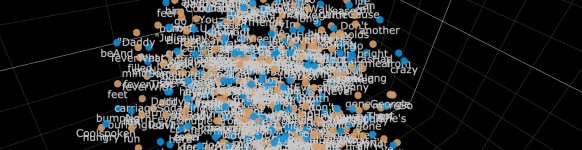
Since my 10 year old related posts plugin can’t even be downloaded anymore because of a security vulnerability, I figure it’s time to bring related posts into the ✨ AI era ✨ with vector embedding. Surprisingly, I didn’t find any Wordpress plugins to do that, so – inspired by TomBot2000, . . .

What Computer-Generated Language Tells Us About Our Own Ideological Thinking
Earlier this year, the San Francisco-based artificial intelligence research laboratory OpenAI built GPT-3, a 175-billion-parameter text-generating artificial intelligence. Compared to its predecessor, the humorously dissociative GPT-2, which had been trained on a data set less than one hundredth as large, GPT-3 is a startlingly convincing writer. It can answer questions . . .